
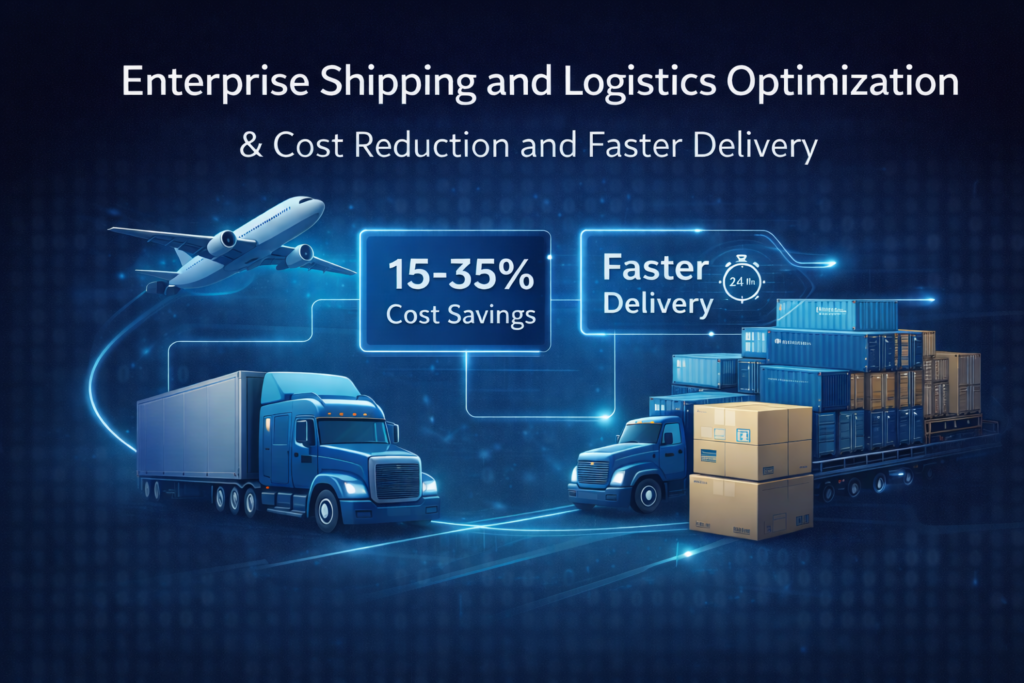
For High-Volume, Multi-Carrier Operations
Organizations spending $2M or more annually on outbound parcel and LTL shipping often reach a point where existing tools, carrier strategies, and processes no longer reflect the true scale or complexity of the operation.
This page describes a structured, enterprise-level approach to shipping cost optimization and logistics efficiency, overseen through KOSMD Consulting, Inc. to ensure evaluation, negotiation, and implementation are conducted with clarity, alignment, and full stakeholder understanding.
Independent Evaluation, Advocacy, and Implementation Oversight
Shipping is no longer a transactional function.
For high-volume organizations, it is a material operational and financial lever — and evaluating shipping platforms requires more than a demo or rate comparison.
KOSMD Consulting, Inc. facilitates and oversees the evaluation and implementation process, acting as an independent advocate to ensure requirements are clearly defined, expectations aligned, and all parties fully understood throughout discovery, negotiation, and deployment.
When Shipping Complexity Becomes a Business Risk
Organizations operating at scale often encounter the same issues:
- Shipping spend exceeding $2M annually with limited transparency
- Negotiated carrier rates that still result in unpredictable fees
- Overreliance on a single carrier or limited carrier mix
- Disconnected parcel and LTL execution
- Underperforming or inflexible shipping software
- Manual intervention required to manage exceptions, billing, and audits
These issues rarely stem from poor management.
They are typically the result of systems and strategies that no longer match operational complexity.
A Structured, Independent Approach to Shipping Optimization
Rather than introducing software directly, KOSMD Consulting, Inc. provides a structured evaluation framework for organizations assessing enterprise-grade shipping execution platforms designed for high-volume, high-complexity parcel and LTL operations.
This approach ensures that:
- Operational requirements are fully understood before solutions are evaluated
- Commercial terms are reviewed with appropriate context
- Expectations between internal stakeholders and external providers are aligned
- Decisions are made with clarity and full visibility into implications
The objective is not adoption — it is fit, value, and long-term operational alignment.
What This Type of Platform Supports (At a High Level)
For organizations that qualify, enterprise shipping execution platforms of this class are designed to support:
- Multi-carrier, multi-mode parcel and LTL execution
- Routing decisions aligned to required transit time and service levels
- Improved packaging and cartonization efficiency
- Centralized execution, visibility, billing, and audit workflows
- Scalability for high-volume shipping environments
These capabilities are evaluated in context, based on the organization’s data, operating model, and constraints — not assumptions.
What Organizations Typically Seek to Achieve
When properly evaluated and implemented, organizations commonly pursue:
- Average shipping cost reductions of 10–20%
- Improved reliability and delivery performance
- Reduced operational friction within shipping teams
- Greater transparency into true shipping cost drivers
- A more resilient, multi-carrier shipping strategy
Importantly, these outcomes are validated through analysis, not promised in advance.
How Evaluation Occurs
• Data-Driven Evaluation Before Commitment
KOSMD Consulting, Inc. oversees a fact-based evaluation process prior to any implementation discussion:
- One-six months of historical shipping data is analyzed
- Execution logic is applied to identify inefficiencies and opportunities
- Findings are presented in clear, operational terms
- Where inefficiencies exist
- What cost reductions could have been achieved
- Whether this solution is worth further consideration
- Trade-offs, limitations, and risks are discussed openly
This ensures leadership can determine whether meaningful value exists before time, capital, or internal resources are committed.
Who This Engagement Is For
This is appropriate if:
- Annual outbound shipping spend exceeds $2M
- Parcel and/or LTL shipping is operationally complex
- Shipping is managed internally
- Multiple stakeholders influence logistics decisions
- Shipping performance affects margin or customer experience
This is not appropriate if:
- Shipping is not strategically material
- Shipping volume is low
- A basic label-printing tool is sufficient
- There is no appetite for structured evaluation
- Across enterprise shipping environments, the same challenges appear repeatedly:
The Role of KOSMD Consulting, Inc.
KOSMD Consulting, Inc. serves as an independent advocate and process lead throughout evaluation and implementation.
This includes:
- Translating between operational, technical, and commercial considerations
- Ensuring requirements are accurately represented
- Addressing concerns from all parties
- Managing expectations during negotiation
- Overseeing transition into deployment when appropriate
The purpose is to protect clarity, alignment, and decision quality — not to push a particular outcome.
Next Step: Structured Discovery Call
For organizations seeking a disciplined, transparent evaluation of shipping cost reduction and operational efficiency opportunities:
👉 Request a discovery call
This conversation is designed to determine whether further evaluation is warranted — and whether KOSMD Consulting, Inc. is the appropriate partner to oversee that process.
